Friday, December 23, 2011

Humble Indie Bundle 4!

I probably should have mentioned this when it first came out, but Humble Bundle 4 is out, and it looks to be the best yet!
The deal:
Name your price to get these games:

- Jamestown (intense bullet hell action, up to four players can play local co-op)


- Bit.Trip Runner (rhythm platforming at its finest, I've talked about another in the series, Bit.Trip Beat, here, and Runner has a similar feel)


- Super Meat Boy (masochistic platforming at its finest, I've talked about it here)


- Shank (fluid 2D hacking and slashing, two player local co-op, I've talked about it here)


- NightSky HD (puzzles about a ball)

If you beat the average price ($5.27 at time of writing), then you also get these games:

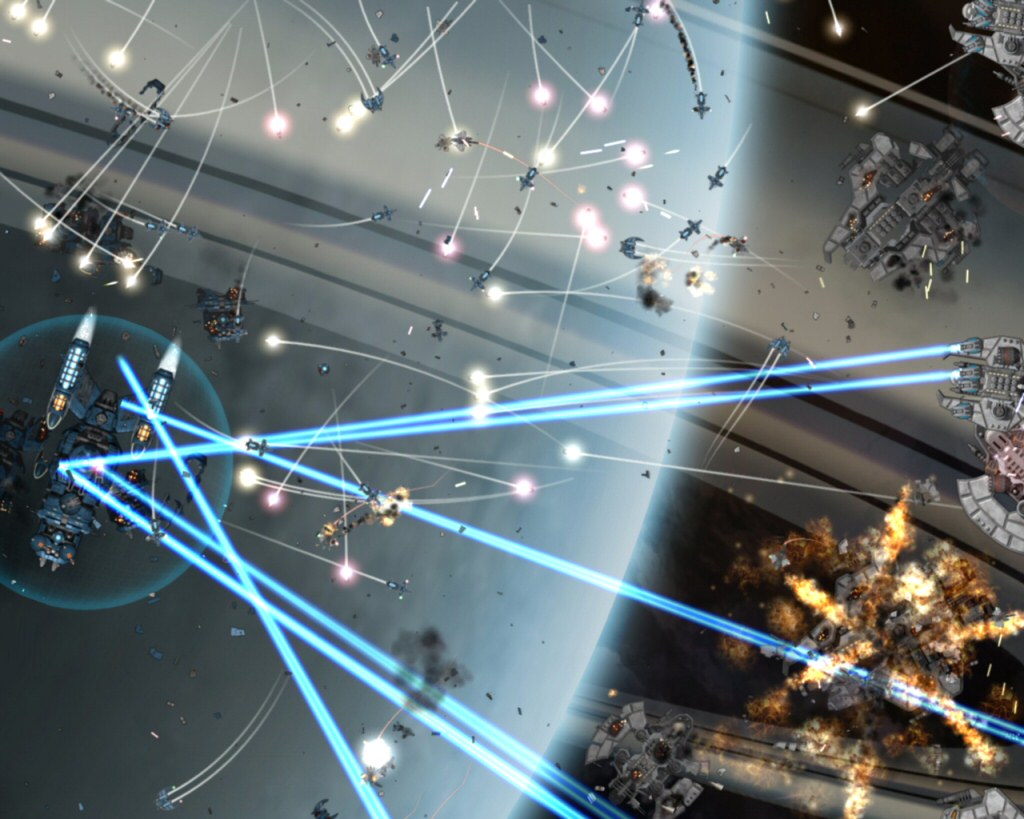
- Gratuitous Space Battles (haven't had a chance to play this one yet)


- Cave Story+ (awesome action platformer with some extras added for Steam, I've talked about it here)


- Crayon Physics Deluxe (draw and physics things to get balls to stars)


- Cogs (haven't had a chance to play this one yet)


- VVVVVV (super difficult platformer where you flip gravity instead of jump, I've talked about it here)


- Hammerfight (haven't played this one yet either)


- And Yet It Moves (puzzle platformer, rotate the world to end up where you want to go, I've talked about it here)


That's 12 awesome games (and most of these really are pretty awesome, we've already talked about a good number of them here) that you can get for potentially less than $6 (don't be so stingy though, the retail value for all these games is $165 and the money you pay either goes to the developers or to charity). All of these games are available for Windows, Mac, and Linux, and you can even get these added to your Steam account. In addition to getting the games, you'll also get all of their soundtracks too, at no additional cost. And there's no DRM, so once you've bought it, you can install it anywhere you want. There is pretty much no reason to NOT get the humble bundle. So what are you waiting for? At time of writing, there's a bit less than 4 days left to take advantage of this amazing deal, so go go go! And here's the link again in case you missed it at the top: http://www.humblebundle.com/

Sunday, December 18, 2011

Video Game Genre Mixing

I really meant to write a more even mix of reviews and things that are not reviews. Unfortunately, since most of my posts are started by the thought "Oh no! It's been ___ amount of time since I last posted something! I better post something now!", and since reviews are somewhat simpler to plan and write, reviews have been pretty much all I've done. But now, for something that is not a review! Today, I'm going to talk about genres, and the mixing thereof.
Before going any farther with the mixing of genres, you should probably at least skim the Wikipedia article about video game genres, found here. The list covers all the major genres and sub-genres, and the broader genres have their own page detailing variations. Already on here you're going to see plenty of genre mixing, and it's nigh impossible to sort out any 'pure' genres. So in case I need it, I'm going to go with defining any 'mixing' as a relatively recent (definitely within the last decade or so) mixing of two or more other genres. This means genres like 'shooter-platformers', Metroidvanias, and action adventures don't count as mixed genres for the purpose of this discussion, since those have existed for a really long time already.

So now that you're hopefully familiar with any genres I might name, let's get to it! The first thing to consider when mixing genres is why mix them at all? For the most part, it comes down to one thing: selling more copies. The video game market is very heavily populated, and in order to be noticed you either need really high quality or originality (of course, having both only makes things better). Games like Call of Duty 4: Modern Warfare (added RPG elements to the multiplayer) and Portal (first person shooter puzzler) probably would not be as good without the mechanics that they mixed, while games like Puzzle Quest (RPG with Bejeweled gameplay) and countless indie puzzle platformers simply wouldn't exist.
Henry Hatsworth: Platforming on top, puzzling on bottom.
As an aspiring game dev, I've found that sometimes all you need for an interesting game concept is to pick a few genres that hadn't been mashed together yet and work out how they would mesh. It's also much easier to pick existing game mechanics and figure out how to mix them than it is to come up with entirely new game mechanics, plus there's a lot of room for variation. For example, consider Henry Hatsworth in the Puzzling Adventure and Blocks That Matter. Both of these are puzzle platformers, and use similar puzzle mechanics (Henry Hatsworth uses Tetris Attack, whereas Blocks That Matter uses just Tetris), but the games are quite different. As another example, consider Braid and The Misadventures of P.B. Winterbottom, both of which are platformers that use a time manipulation puzzle mechanic.

So what genres go well together? I think the one genre most suited for being mixed with others is the role playing game. Character progression can be added to virtually anything, and already has been added to many things. For example, most modern shooters now have character progression tied to the multiplayer suite. Puzzle Quest mixed RPG elements with Bejeweled gameplay, while Runespell: Overture did it with Poker. The entire Metroidvania genre is based around mixing platforming with character progression. Moving away from role playing elements, I personally really like puzzle platformers. Platformers are very versatile, and the puzzle genre captures a huge variety of gameplay mechanics, which means that puzzle platformers can be incredibly diverse and interesting. Moving other genres to first person perspective can also be done really well, as proven by the Metroid Prime trilogy. I wouldn't call cooperative play a genre by itself, but adding a co-op mode to other genres can often turn out well. As for other genres, they may work, I just don't have enough experience to say for certain.
Knights in the Nightmare: There is a such thing as too much
However, not every attempt at mixing genres is going to turn out that great. Some mechanics just don't work that well together. For example, slow paced mechanics like stealth don't tend to go with fast paced mechanics, like automatic machine guns. You could see the result of this in Splinter Cell Conviction, where the stealth focused sections were immensely superior to sections where the stealth mechanics were forced to mix with more shooter focused level segments. Problems also occur if you make things too complex, and end up trying to mix together too many things. For example, this is very definitely a problem in Knights in the Nightmare. In Knights in the Nightmare, gameplay is similar to turn based strategy, at least on the surface. You place soldiers, and have a certain number of turns in a battle to defeat all enemies. However, each turn takes place in real time, and your soldiers are immobile but have various attack radii, shifting the game closer to tower defense. You control the battle as the Wisp, and must direct the battle while avoiding enemy attacks. These attacks can only hit you, and their patterns are very definitely reminiscent of bullet hells. There are also role playing elements, and a few other miscellaneous mechanics, like a light/dark mechanic (some weapons and characters do better in the light phase and vice versa, the effectiveness of any phase diminishes the longer it's been in effect, and the Wisp can switch phases at any point), and a durability mechanic (characters have limited vitality, with which they use attacks, when vitality reaches 0 the character is gone for good, while weapons have standard durability). The gameplay is incredibly complex, and it gets to be a bit too much to handle. Complex gameplay certainly has its pros, but I believe that the best games are easy to learn and difficult to master, which clearly isn't happening here.

That's about all I really have to say for mixing genres. I personally think that mixing genres is a great thing for video games, I'm sure there are a lot of unique and interesting combinations that haven't been done yet. But as the previous paragraph has hopefully made clear, this doesn't mean that genres should be mixed haphazardly. When the proper care is taken, amazing things can happen, but there is always the possibility for things to go horribly wrong. That should probably be a lesson for life in general.

Saturday, November 26, 2011

QUICK REVIEW- Batman: Arkham City

Haven't posted in a little while, but I'm still doing better than October! And now I have plenty more things to write about, by which I actually mean I have maybe three more games to write about. So first up is Batman: Arkham City.
Arkham City is the sequel to Batman: Arkham Asylum, and shifts the focus of the game to a more open world. In Arkham Asylum, inmates have taken over the asylum and Batman goes in to sort things out. Arkham City takes place several months later, and Mayor Quincy Sharp has sectioned off a portion of Gotham City to become the new Arkham Asylum. Bruce Wayne is campaigning against Arkham City when he is arrested and thrown into the asylum. Bruce Wayne becomes Batman, and sets out to take out the super-villains causing trouble in Arkham City, and to stop the dastardly plans of the new warden of the asylum, Hugo Strange. The story is still linear, but now there are more sidequests, and a much wider area for collectibles to be hidden in.

The story of Arkham City is interesting, with a very large mix of Batman villains getting caught up in the mix. However, though many villains show up, a lot of the appearances are very brief, and it frequently feels like the villain was included for the sake of inclusion. In particular, I feel like Two-Face was rather heavily featured in the advertisements, but only shows up at the very beginning, after which he apparently disappears. He does return in the Catwoman content, but only once at the very end, and in an entirely unsatisfying way. As a second 'however', though, each villain's character is portrayed amazingly, even with the short screen-time given. And as a second 'in particular', Penguin very quickly left me feeling disgusted at his sadism, while the battle with Ra's al Ghul is extremely cinematic. I don't feel like the campaign is particularly long (but then, I am currently in the middle of playing Skyrim), but there is a scattering of sidequests available, many of them featuring villains from Arkham Asylum.
As for gameplay, Arkham City takes what Arkham Asylum does well and adds more to it. Fighting flows beautifully when you're in hand to hand combat, and it feels amazing to rack up immense combos while fighting off hordes of enemies. Multiple enemies can be countered simultaneously now, making larger groups of enemies more manageable. A couple new types of enemies have been added, such as ones carrying sharp weapons, ones with body armor, and ones with riot shields, to force the player to mix things up even more. Most of Batman's gadgets can now be used on the fly with a simple button combination, allowing a much greater variety in combo possibilities, which makes the overall combat system much deeper and considerably more difficult to master. It is entirely possible to get through the game by mashing mostly the attack and counter buttons, but to do it stylishly and still avoid taking lots of damage takes a lot of work and feels immensely satisfying.

The stealth sections also have added several new elements to the mix. Enemies in these sections also come in more varieties now. Infrared goggles allow thugs to scan a vantage point to see if Batman is hiding there, some thugs will place mines that only detonate when triggered by Batman, and some even have signal jammers that prevent the absolutely crucial detective vision from functioning properly. As a stealth game fan, I personally loved every single one of these segments, and honestly I think that they don't happen enough in the game. While thugs with guns do appear more frequently on the overworld near the end of the game, taking out a group of thugs with guns while outside feels significantly different from taking out a group of them while inside a building. Because of this, I feel like the focus of the game shifted more towards hand to hand combat than stealth, while I remember Arkham Asylum as a more equal blend of both.
And finally, the replay value. Arkham City is absolutely immense, and there are hundreds of Riddler challenges to complete, scattered all over the world. Riddler trophies can require quite a range of gadgets to acquire (those that Batman can't yet acquire can be tagged and marked on the map), and some are only available for Catwoman to collect. To help with obtaining every single collectible, Riddler informants are randomly thrown in with groups of thugs. If Batman can take out every other thug before the informant, he can then interrogate the informant to discover the locations of a few Riddler challenges. After beating the game, a New Game Plus mode is unlocked, which puts Batman at the start of the game with all upgrades and gadgets intact. Thugs come in larger and more complicated combinations, and the counter icon that appears over an enemy's head disappears. And finally, there are challenge maps, where the player can pick one of the characters (Batman, Catwoman, Robin, and Nightwing) to take on waves of unarmed enemies (earning points for performance and medals for reaching point thresholds), or clear a room of armed enemies (earning medals for taking out a thug in a particular way). Basically, you can play Arkham City for as long as you could possibly want.

So in case you couldn't tell yet, Batman: Arkham City is an amazing game. The story is exciting and the characters are interesting. The hand to hand fighting is fluid and the stealth gameplay makes you really feel like a predator stalking the darkness. And there is more than enough content to keep you playing for weeks. There are some flaws, but it does so much more right, which makes Arkham City possibly the greatest comic book game yet created.

Saturday, November 5, 2011

In which Shoofle attempts to pull some noses from their high-in-the-air vantage points


As a foreword: This post is about pure rhythm games, and not so much about games with rhythm elements - which I should be writing about in the near future. "Near".

Alright, that's it. I'm finally accepting it. I am a rhythm game player.
I've held my fair share of anti-rhythm snobbiness in the past, internalizing the view that rhythm games are lesser games on account of being focused on a single gameplay feature.

When you want to make "press buttons in time with the music" more difficult, you generally just add more buttons and faster music. Contrast this with the variety of action puzzle genres (puzzle platformers and shooters for the most part), which add complexity by throwing in unexpected game elements - the added difficulty is in figuring out how to accomplish the new tasks. Rhythm games don't generally stray too far from the "higher levels, faster music!" formula. Even heavily gameplay-focused games and genres can still have unexpected or unforeseen complexities - skill platformers like Super Meat Boy and their ilk tend to have an overbearing complexity. Even though you're still essentially pressing buttons rapidly at the right times, it seems like their complexity involves more mental skill - you have to figure out how to best your obstacles, rather than simply reading off the list.

On the other hand, all the lauded first person shooters - which I do, indeed, love - are frequently just as simple. I don't generally find myself scratching my head over how to approach a room in Shooter McKillygame 5, I just let the instinctive part of me take over and manage the issue. That's how I lose time playing games. It's definitely more fun when a game has mental difficulty as well as physical or instinctive difficulty, but it's rather rare, in my experience. The only thing rhythm games lack in comparison to other more "serious" genres is a well-integrated story... But if you start arguing that the majority of "serious" games - I'm looking at you, f-three-ar, I'm looking at you, Mario, and I'm looking at you, every racing game ever made - can stand solely on the their storytelling, then you may need your head examined. I'm not saying that those games have bottom-of-the-well storytelling, but that's not what makes them fun.

But let's think about that for a moment - why don't rhythm games have as well-integrated a story as many other genres? When you get down to it, the problem is somewhat inherent in the genre - there's only so much that you can do to tell a story in an interesting, interactive way, when the gameplay is so rigidly structured. It might be interesting to see more rhythm games built around operatic works or ballads - something telling a story. Even then, though, the player never makes a choice - the music can always just continue playing if they fail. The other option, to make the musical gameplay entirely separate from the story (see career modes in every Guitar Band style game) just makes it worse. Then you lose out entirely on the integration effects that make video games a compelling medium in the first place.

In the end, I think that all this snobbery over game genres is rather silly. Games should be judged on their own merit - for all that you might argue that rhythm games have no depth, I will bet good money that I can make a shallower RPG-esque game than Dance Dance Revolution. You're free, of course, to have personal preferences - but when you start claiming that RPGs are an inherently stronger storytelling and experience-crafting medium, you've tipped over the line.
There. I gave you a picture. Happy?

Friday, November 4, 2011

Humble Voxatron Bundle Impressions

The Humble Bundle is a great idea. Indie game devs allow buyers to pay any price for their games, and the revenues are split between the devs and not-for-profit organizations (I'm not sure if this changes with each bundle, but the current bundle donates to the Child's Play charity, and the Electronic Frontier Foundation) however the buyer wants. Money gets donated to some good causes, gamers get some neat indie games for typically less than they usually sell for, and while the devs probably don't make as much of a profit, they definitely benefit from their time in the spotlight. So, long story short, you should go buy the humble bundle!
Before I get into my impressions of the games, I should probably mention what games are even part of the bundle. The bundle this time consists of three games. No matter what, when you purchase the bundle, you will receive the alpha version of Voxatron. If you pay over whatever the current bundle average is (around $5 last time I checked), then you will also receive the games Blocks That Matter and The Binding of Isaac, both of which are also available on Steam for $5 each. There is no DRM, so you can install these games anywhere you want as often as you want, and all three games are cross platform, so you can get it regardless of whether you're running Windows, Mac, or Linux. There's even an option to get Blocks That Matter and The Binding of Isaac added to your Steam account. Now, onto the actual games!


Tuesday, November 1, 2011

QUICK RETRO REVIEW- Psychonauts

Only one post in all of October? I was really hoping to do better than that... Also, just a note, I've gone and edited past posts so that the entire article isn't visible on the main page, figured it made everything a bit cleaner. Unfortunately, not all of the posts were very easy to split up, so some of the splits might be a bit ugly, and I apologize for that.

Since the last post got me thinking a lot more about DoubleFine, I figured I might as well also talk a bit more about Psychonauts, because omgPsychonautsisamazingspaz. Anyway, on to the review thing!

Sunday, October 23, 2011

QUICK REVIEW- Stacking

Once again, apologies for not posting and whatnot. The game for today is one that I actually finished quite a while ago, but then never thought to write about because it's a Playstation Network game and therefore somehow slips my mind when I think about what I've played recently. But enough about my forgetfulness! Onwards to the review!